This is a one-time holistic guidance session designed to support focus, behavior, and well-being for individuals with attention or sensory challenges. This service does not diagnose, treat, or ADD cure / cure ADHD, ASD cure, or any medical condition. All guidance is wellness-based only.
The Science of Reversing Autism/ADHD
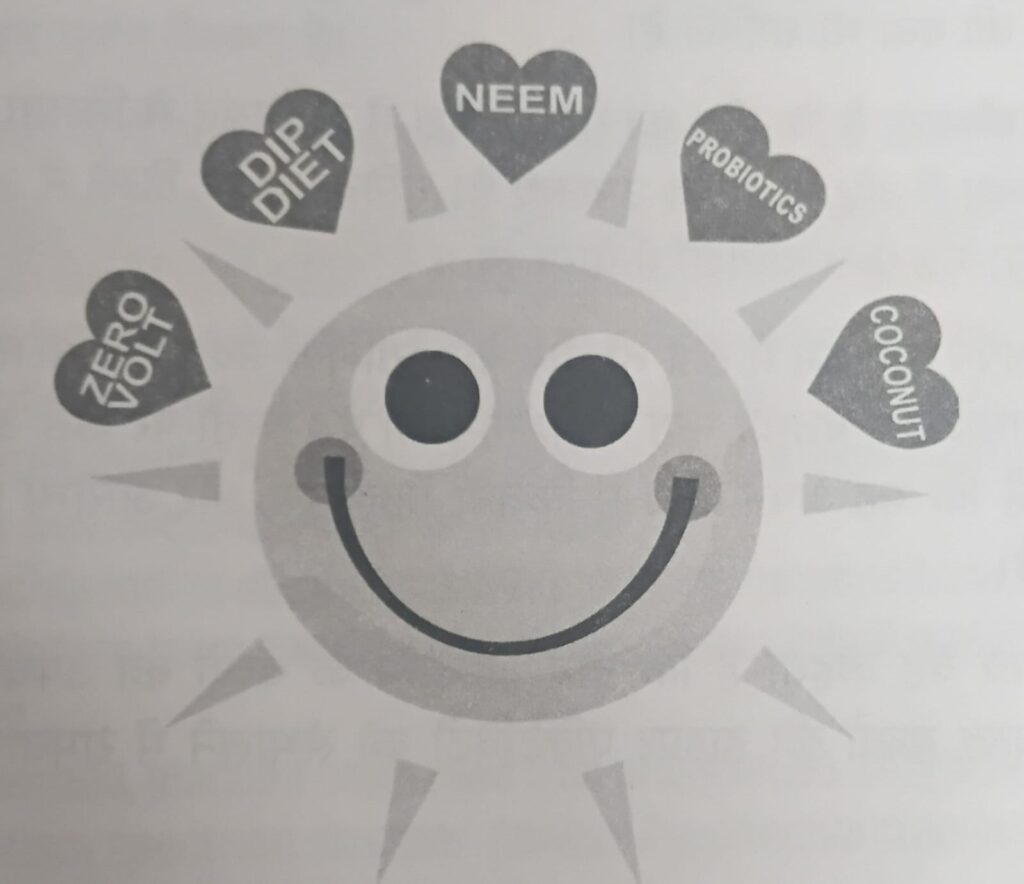
ZERO VOLT
DIP DIET
NEEM
PROBIOTICS
COCONUT
Model of Autism preventive protocol
In this module, we’ll tell you about autism and ADHD reversal. Reversal means reversing disorders like autism and ADHD, eliminating them completely. You may have heard that these disorders cannot be cured, but we can prove with certainty that if you apply what you learn in this book to your children with autism or other disorders, approximately 95% of children will see recovery within seven to ten days. The child recovers completely within a few days. This same protocol applies to other similar disorders and adult patients.
The child recovers completely within a few days. This same protocol applies to other similar disorders and adult patients.
▶ Neurodevelopmental Disorders
By now, you’ve learned from Causes of ADHD / ASD, how a child becomes a victim of autism, why they develop ADHD, why they develop neurodevelopmental disorders, and then we have been given the reasons, along with evidence.
As you saw in our first Model of Cause, the primary cause was vaccines. Vaccines given to children during childhood are the primary cause and trigger.
It destroys the blood-brain barrier. As you know, it acts as a kind of shield for the brain. Don’t think of it as a physical shield. In fact, certain cells in the brain’s blood vessels act as a shield. This means that only the things it needs, such as oxygen, glucose, and certain hormones, enter the brain. Our brain is able to function properly only with these nutrients. This is what controls all the body’s reactions. This shield has been named the blood-brain barrier.
Vaccine’s damage this very shield, disrupting its functioning. In most children, vaccines are the biggest factor leading to mental disorders. It’s not necessarily true that such children will develop autism or ADHD. But most children will develop some form of it.
You will also find evidence for this later in this section.
Next, we discussed another factor: medications. Excessive doses of antibiotics, paracetamol, and antiviral medications given to children during childhood can also lead to blood-brain barrier dysfunction.
In this section, we’ll discuss the third factor in detail: electromagnetic fields. This didn’t exist until 10-15 years ago. Until a few years ago, we didn’t have access to mobile phones and the internet in such abundance, but now, mobile and internet exposure has increased exponentially. That is, a circle of electromagnetic field and electromagnetic radiation has been formed around them and they have come under its grip knowingly or unknowingly.
If a child lives in a home with Wi-Fi, they are surrounded by electromagnetic fields, even if they don’t need it. However, nowadays, there’s no child who can do without a mobile phone. Children spend hours with their mobile phone in their hands. Even while sleeping, the mobile phone is always near their bedside, charging.
This electromagnetic field is responsible for blood-brain barrier dysfunction, which is a major factor that we will discuss in detail.
You just learned about blood-brain barrier dysfunction. Simply put, it’s a shield God has given the brain that prevents harmful substances from entering. Viruses, bacteria, or drugs like antibiotics, which could cause brain damage, cannot enter. This also ensures the brain receives the nutrients it needs most. In Module 1, we discussed how stimulants disrupt the gut microbiome, leading to gut-brain axis dysfunction. Similarly, animal protein, dairy products, and gluten can trigger autoimmune reactions in children, further contributing to this dysfunction, leading to a variety of problems. This is a well-established fact, and readers already know it with evidence. This is why the situation is worsening today.
If recent reports are anything to go by, 1 in 60 children, and in cities like New York or Washington, 1 in 38 children, are becoming autistic. It’s clear that some of these factors are more prevalent in those places. Similarly, 1 in 10 or 7 children are developing ADHD.
We will take our discussion forward based on whatever evidence we have so far, but before that let us talk about some background.
| Blood brain barrier Dysfunction |
| The blood-brain barrier in systemic infection and inflammation. Cell Mol Immunol. 2021 Nov:18(11):2489-2501 doi: 10.1038/s41423-021-00757-X Blood-Brain Barrier Dysfunction Amplifies the Development of Neuroinflammation: Understanding of Cellular Events in Brain Microvascular Endothelial Cells for Prevention and Treatment of BBB Dysfunction. Front Cell Neurosci. 2021 Sep 13,15:661838. Folate nutrition and blood-brain barrier dysfunction. Curr Opin Biotechnol. 2017 Apr: 44:146-152. |
There are numerous research papers that provide detailed information about blood-brain dysfunction, proving that it contributes to neurodevelopmental disorders like autism and ADHD. You can read these references in detail.
Additionally, I’ll use another model to illustrate my point. For convenience and understanding, I’ve named it the “Model of Cure.” This model is presented at the beginning of Module 2. When discussing the timeline for addressing disorders in children with autism and ADHD, you’ll need to follow the sunrise and sunset times. Whether a child is hyperactive, has difficulty making eye contact, has speech difficulties, has trouble concentrating, has unusual behavior, or is often isolated, following the Model of Cure is essential to freeing the child from the trap of autism and ADHD. This model will be discussed in detail in the subsequent sections of Module 2.
| The group-brain axis |
| Multi-level analysis of the gut brain axis shows autism spectrum disorder-associated molecular and microbial profiles. Nat Neurosci 2023,26:1208-17 |
▶ Second Brain
Next, we need to understand the gut-brain axis. You know, our intestines, or digestive system, are collectively called the “gut.” Medically This is our second brain. There’s always a two-way communication between the two. If that communication is good, we can communicate comfortably and effectively. I’m saying my point, and you’re understanding me.
We are all part of society. We have expectations from society. Society has expectations of us. If we don’t suffer from disorders like autism or ADHD, it means our gut-brain axis is perfectly intact and there is two-way communication between them.
▶ Group brain axis
But if we look at the opposite, children suffering from disorders like autism or ADHD have dysfunction in the communication between their gut and brain.
There’s a breakdown in the network between them. We must understand that breakdown. Only after understanding it can we determine how to correct it, because it’s the cause of ADHD-related symptoms or autism spectrum disorder, meaning some children will exhibit autism symptoms, while others will exhibit other symptoms. This is a spectrum, and can include hypersensitivity, repetitive behaviour, anxiety, or eating disorders that are different from normal children. Their social interaction is minimal. For example, if you ask someone their name, you’d expect them to tell you their name, but instead of saying their name, they’ll repeat what they just said. If you ask them where they want to go, they’ll repeat what they just heard instead of answering, meaning their gut-brain axis is impaired. These are small things, but they make a child completely dependent on others. He is unable to be independent in any way. This is autism spectrum disorder.
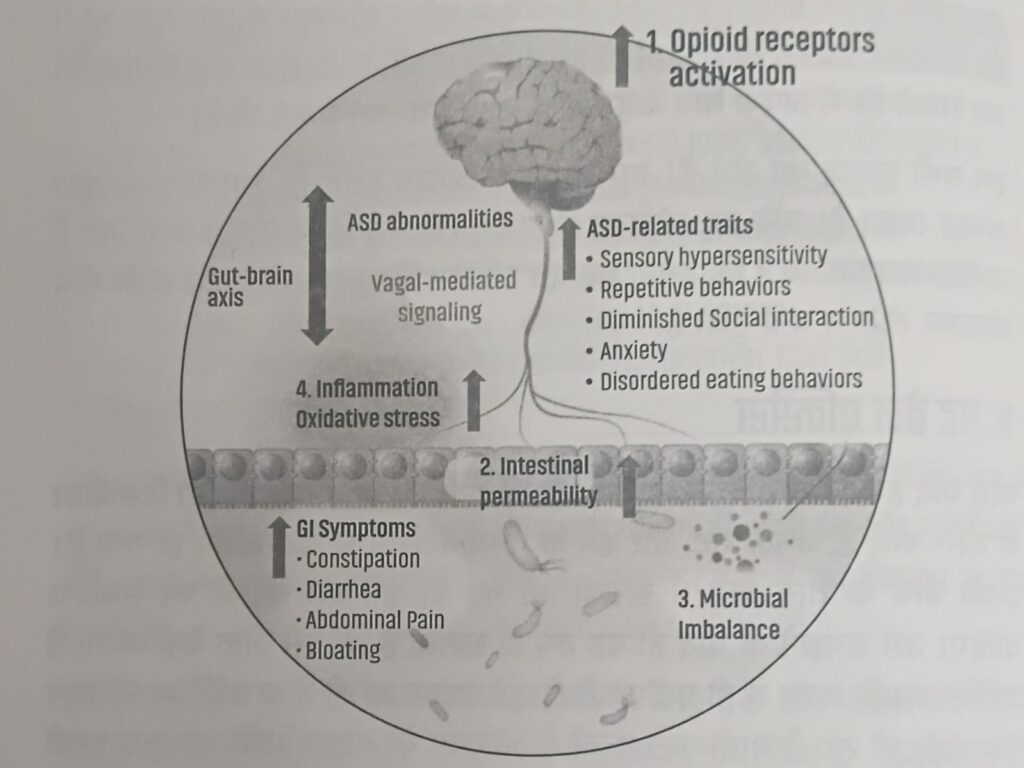
There are four factors that can disrupt the gut-brain axis.
1. Opioid receptors activation
2. Intestinal permeability
3. Microbial imbalance
4. Inflammation
1. Opioid Receptors Activation
The first is opioid receptor activation. What is an opioid receptor? It’s a type of protein in the brain that’s very intelligent. You could also call it a lock-and-key system.
It acts as a lock for your brain. This lock determines whether or not it will open with a key. For example, there’s a hormone called endorphin. When the body produces it, it unlocks the lock. There are certain medications that can open or destroy it. If this lock and key stop working properly, it can cause significant problems.
For example, let’s say your house is locked, and only someone with a key can open it. What if that key falls into the wrong hands? Then, if that lock starts opening without a key, what will happen to the house? The entire system of the house will be shaken. Anyone can come in and plunder the house.
Similarly, your brain is like a house, and the locks on that house can be called opioid receptors. If that lock is activated at the wrong time or left open, it means anyone can enter. Then the house is unsafe.
The five factors I mentioned at the beginning of the book (vaccines, medications, stimulants, etc.) automatically activate opioid receptors. This is the first response a healthy child has when exposed to those factors.
2. Intestinal permeability
If you look at the previous picture, you’ll see intestinal permeability at number two. What is it? Our intestinal permeability is a kind of filter, and this filter works very intelligently to determine which things should pass through it and which should remain inside.
For example, there are different types of bacteria, different types of viruses, and different types of microbiomes. So, what should be allowed in? Which nutrients should be allowed to pass through? Which toxins should be blocked? Intestinal permeability determines the amount of a nutrient required. If this permeability, or filter, doesn’t function properly, our gut won’t be able to perform its role effectively. Communication between them can be disrupted.
3. Microbial imbalance
After this, it’s easy to understand the third factor: microbial imbalance. Our entire gut and digestive system are filled with a microbiome. Microbiome means micro-organisms, which primarily consist of bacteria. In addition, there are many germs that you can see with a lens, but they cannot be seen with the naked eye. On average, their number is about ten times that of the cells in our body. This population is called the microbiome population. It acts as a signalling system. When are you hungry? When are you full? What are your emotions like? What are your alert moments? All these signals travel from the gut to the brain, and the microbiome plays a role.
This microbiome also signals how much insulin your pancreas should produce and how quickly. This microbiome refers to the microorganisms that live in your gut. A uniform population of microorganisms is essential for proper functioning of our bodies.
You can think of it like a factory that’s doing its job properly. A factory can only function properly if it hires people according to its needs. It’s predetermined how many people will work in the manufacturing department, how many will be in HR, how many accountants will be hired, how many will be in the production department, or how many security guards will be deployed. Only if all the people meet the needs of their respective departments and perform their duties properly can the factory be guaranteed to run smoothly. It has to produce goods, sell them, and earn a profit; only then will its goal be achieved.
Now, think a little differently and imagine a factory where everyone is from the production department. There’s a production person in the accounts department. There’s a production person in the manufacturing department. There are people in every department, but they’re all from the production department, meaning they know only their own work. They’ve even replaced the security guards. If the factory were to operate like this, it would shut down within days. Outwardly, everything would appear fine, but deep inside, there would be a lot of chaos. Disorder would begin to show. Ultimately, it would have to be shut down.
Similarly, the microbiome population in our intestines is made up of diverse organisms whose balance must be maintained for our entire body to function properly. If this balance is not maintained, it is called microbial imbalance. Stimulants, which we consume through food, play a major role in disrupting this balance. Antibiotics often play a significant role. Children are given heavy doses of medication for seemingly trivial reasons. Sometimes, they develop autoimmune reactions. Some children are allergic to gluten, a source of wheat. This is the third important factor.
4. Inflammation
After this, if we talk about the fourth factor, it is inflammation. Inflammation in the gut and along with it, the brain. Inflammation in the brain and gut will impair the connection or communication between them. This impairment leads to neurodevelopmental disorders. If this happens to a child, it will be called autism. If it happens to an adult, it will be called Parkinson’s, dementia, or Alzheimer’s. Similarly, a child may develop muscular dystrophy or cerebral palsy. These disorders may vary, but something will definitely happen.
The most important point is that even three of these five factors—vaccines, stimulants, and medications—can lead to gut-brain axis dysfunction. The way the brain and gut work together intelligently can be disrupted.
| The group-brain axis |
| The gut microbiota and autism spectrum disorders. Frontiers in Cellular Neuroscience, (2017). 11, 120. Gastrointestinal microbiota in children with autism in Slovakia. Physiology & Behaviour, (2015). 138, 179-187 |
You can see the references of what I just told you about the stomach and the brain at this place.
| A.P.P. Module-2 |
| Part-1: What to do Part-2: What not to do Part 3: A.P.P. Timeline Part 4: Scientific Consensus vs. Conspiracy |
To help you understand my point, I’m dividing this module into four parts. The first part will explain what you should do. The second part will explain what you shouldn’t do. The third part will discuss the A.P.P. (Autism Preventive protocol) timeline, that is, the daily routine of a child with autism or ADHD. The dos and don’ts from waking up in the morning until going to bed at night. Then, in the fourth part, we’ll discuss scientific consensus versus conspiracy. You’ll have the opportunity to consider why, if there is a solution, it isn’t reaching every child. You’ll question why what’s already proven isn’t becoming more prevalent globally? Why aren’t harmful things being eradicated? Why is there a lack of awareness about them?
Now after this we move on to Part-1 of our module.
Part-1
What to do
After understanding the problem and its root causes, the next question is what to do. We know well how autism occurs, how many different forms it can take, and what the symptoms and behaviors can be. We’ve learned all this well.
We also know how our gut and brain work and how they interact. Now the real question is what to do? As you well know, based on the evidence, vaccines are the biggest factor. What we need to do is prevent children from getting any more vaccines and reverse the blood-brain barrier dysfunction caused by the previous vaccines. If we can fix that, then we’re halfway there.
▶ First Step – Neem
The first step we are going to take in this series is Neem.
Yes, the neem tree is unique among all other trees. If there’s a flood or hazardous chemicals, such as the Bhopal gas tragedy, all vegetation is at risk, and all the plants and trees die. However, the neem tree remains unharmed.
The neem tree stands tall and proud, regardless of the circumstances. You might think I’m veering off topic, but you’ll soon understand where I’m headed.
The neem tree has unique properties that set it apart from the millions of other trees and plants in the world. There are more than 500,000 trees worldwide, of which 6,500 are classified as medicinal plants. Neem is considered the most important of these.
The United Nations named it the “Tree of the 21st Century” in 2011. If you look back in history, a hundred years ago, the British named it “The Village Pharmacy.” The leaves, bark, flowers, and roots of this one tree can be used to create medicines for every ailment in the world, including those for autism and ADHD.
We are fortunate to have the neem tree in abundance throughout our country. It is available everywhere and freely available. You won’t find neem in every part of the world. It is found in only a few countries.
If we look back into our history, we find mythological references to neem. Our mythological tales tell of the neem tree’s origin on Earth, which clearly demonstrates its importance and health-giving value.
Our experience says that Neem works as a panacea in treating children with autism and in handling the hyperactivity of children suffering from ADHD.
Even children who were five years old and could not even say “Mummy” or “Daddy” started showing positive results within three to seven days of taking Neem supplements. The parents themselves say that their children have received “magic therapy.” Our Neem therapy is magic. Now, we must first use Neem to correct blood-brain barrier dysfunction.
| First Step – Neem |
| Benefits of phytochemicals from Azadirachta indica against neurological disorders |
| Potential benefits of phytochemicals from Azadirachta indica against neurological disorders. Neurochem Int. 2021 Jun;146:105023. |
The neem tree is a living source of health. It is also known by names like Nimba and Margosa. The scientific Latin name for neem is Azadirachta indica. In my words, “Indica, the creator of freedom,” means “Free Tree of India.” Indica means it was born in India. It can also be called the “Free Tree of India.” In Sanskrit, it says:
“One medicine for every disease”
Recognized in the Indian Vedas as an herb that cures all diseases, neem has been a companion in Indian families’ joys and sorrows for centuries. Ayurveda describes neem’s properties in detail.
Not only this, the references that come next also confirm our statement.
| NEEM |
| Azadirachta indica A. Juss Ameliorates Mouse Hepatitis Virus-Induced Neuroinflammatory Demyelination by Modulating Cell-to-Cell Fusion in an Experimental Animal Model of Multiple Sclerosis. Frontiers in Cellular Neuroscience, Volume 14-2020. Azadirachta indica ethanolic extract protects neurons from apoptosis and mitigates brain swelling in experimental cerebral malaria. Malar) 2013 Aug. A randomized, placebo-controlled trial of digestive enzymes in children with autism spectrum disorder. Clinical Psychopharmacology and Neuroscience, (2015). 13(2), 188-193. |
Neem leaf powder and its dosage
Based on all these references given here, you will easily understand how beneficial it is to take Neem leaf powder on an empty stomach to completely cure children suffering from neurodevelopmental disorders.
What is the recommended dosage of Neem leaf powder for a child?
One gram for every ten kilograms of the child’s weight. For example, if the child weighs thirty kilograms, the recommended dose is 3 grams, which is approximately half a teaspoon. Take half a teaspoon of ground neem leaves, dissolve them in warm water, and give it to the child on an empty stomach. This should be done for approximately one to three months.
But you’ll definitely see the magic happen within the first three to four days. I can tell you this from my own experience.
At the time of writing this book, we were monitoring about two thousand children and found the same effect.
Simply administer the medicine in the prescribed proportions, diluted in warm water, and you can expect an immediate, magical response every second, fourth, sixth, or seventh day. Inspired by this magical response, you’ll continue this protocol.
▶ Green Gold
What I’m telling you about this isn’t my invention or imagination. It’s already documented in history. It’s based on evidence, and if you want to know its full mechanism in detail, you can read my book, “Green Gold: The Neem Pharmacy,” which is written on this very subject. Neem is known worldwide as “Green Gold.”
You’ll realize its power when you see a patient or child using it. It’s said that evidence needs no proof, so try giving it to a child with autism or ADHD and see the results for yourself.
It is possible that the child may not want to take neem leaf powder because it has a bitter taste but if something is beneficial for the child then the mother will find a way to feed it to the child.
In this case, too, many mothers have tried different methods to feed neem to their children. They have successfully fed neem powder mixed with honey, made into small tablets. Some children even eat neem leaves simply. If possible, this is also a good idea: chew one leaf for every ten kilograms. If the child weighs thirty kilograms, chewing three leaves is sufficient. This is the first step in our protocol.
A child can consume neem in some form or another: chewing on the leaves, swallowing a lozenge mixed with honey, or drinking neem leaf powder mixed with warm water; it all depends on their preference.
You may be asking how to make neem tablets or powder? While these products are available commercially, I suggest you prepare them at home, and we’ll discuss them later. Then you can create this magical therapy for your child yourself.
| DIP Diet |
| A randomized, placebo-controlled trial of digestive enzymes in children with autism spectrum disorder. Clinical Psychopharmacology and Neuroscience, (2015). 13(2), 188-193. |
Step 2 – DIP Diet
Next, we move on to the second step. Our second step is the DIP diet. I invented it about 15 years ago. We then experimented with it in a limited number of diabetic patients and found that within three days of adopting this diet, approximately 90 percent of diabetic patients were off their medication. Their blood sugar levels returned to normal. By the fourth or fifth day, the blood pressure also decreased and the cholesterol level became normal.
Within 10 to 15 days, their joint pain began to improve. Within a month, the overweight individuals returned to normal weight. They lost 10 percent of their weight in the first month. By losing 5 percent each month, they achieved a normal BMI.
People who suffered from angina saw relief within a month. They were able to stop taking thyroid pills within two to three months. Similarly, when this diet was introduced to diabetic patients, these changes began to occur. Seeing these results, we realized the power of the DIP diet.
If they had continued taking the DIP diet even after recovery, they would have returned three months later to report that they were done with their eyeglasses. Their cataracts were cured. Their cataracts and glaucoma were gone. Thus, we witnessed firsthand that the DIP diet can bring tremendous relief, not just to patients with one illness, but to patients with every type of illness, within a few days.
I am sure that there will be many of my readers who have tried this diet or you know someone who has benefited from adopting this diet.
Trials of the DIP diet have been conducted in different countries, at different times, and with different diseases. Needless to say, the DIP diet has met all the criteria.
In India, the DIP diet was trialed for inflammatory diseases at the All-India Institute of Ayurveda, which falls under the Ministry of AYUSH. They conducted the trial between 2018 and 2020 and found that following it reduced inflammation in any part of the body. Remember, autism and ADHD are also neuroinflammatory disorders, so we expected this diet to reduce inflammation, and we saw positive results in children using it. This is the magic of the DIP diet.
▶ Randomized control trials in other countries
The DIP diet has also been subjected to a randomized controlled trial in Nepal, in the context of diabetes, blood pressure, and obesity. A trial observational study was conducted at Lincoln University in Malaysia, in the context of chronic kidney disease.
Whenever trials were conducted for any disease, positive results were seen. Remember, if you examine the underlying mechanisms and mechanisms of all lifestyle-related diseases, you’ll find that they are inflammatory diseases, such as cancer, diabetes, heart disease, and chronic kidney failure. The DIP diet reduces inflammation in the body, and this has not only been proven, but patient experiences are also available.
Additionally, you need to understand that when our gut microbiome becomes disrupted, we need live enzymes to repair it. These live enzymes are not found in cooked foods because when cooked, heating food above 60-70°C destroys the live enzymes. Replenishing these live enzymes can prevent many diseases, and recovery is quick in the event of illness.
Our DIP diet emphasizes the consumption of fruits and raw vegetables. Breakfast, lunch, and dinner consist of fruits and salads, followed by simple home-cooked meals as needed. The DIP diet is rich in raw fruits and vegetables, which contain live enzymes.
You’ll find detailed information on this topic later in the book. These live enzymes re-uniform the microbiome population, adapting it to our body’s needs. As some of my readers know, the DIP diet is fully validated and proven, gaining widespread popularity both domestically and internationally, making it the preferred choice for those seeking a fit lifestyle free from all diseases.
▶ DIP Diet Randomized Control Trial
| DIP Diet |
| Review: Enzyme inactivation during heat processing of food-stuffs. International Journal of Food Science & Technology, 26: 1-20. The Influence of Food Intake Specificity in Children with Autism on Gut Microbiota. Int. J. Mol. Sci. 2020, 21, 2797 Comprehensive nutritional and dietary intervention for autism spectrum disorder – A randomized, controlled 12-month trial. Nutrients, (2015). 10, 369. |
Here are some randomized controlled trials and various research papers on the DIP diet. All of these studies prove that following this diet reduces inflammation in the body. The live enzymes found in the fruits and vegetables in your diet are effective.
I have a whole book on the subject called the DIP Diet. Readers who don’t yet know the ins and outs of it can read this book – The Best in the World: The DIP Diet. You’ll find all the evidence I’m telling you.
In the first step, we talked about giving neem to children with autism and ADHD, and in the second step, we talked about giving them a DIP diet. This means that children will eat only fruits until 12 noon. This will be their breakfast. They can eat three or four types of fruits. We will discuss the exact quantities of these fruits later.
Similarly, in their lunch and dinner, they will have to eat lots of raw vegetables in the form of salad like tomato, cucumber, radish, carrot, cucumber etc.
Children quickly become bored with any set routine, so we strive to create a diet that they enjoy. You’ll find information on this topic in our third module.
For now, just know that in order to reverse gut and brain dysfunction and restore microbiome imbalances in children, the DIP diet will be the second step.
| Probiotic drink |
| Gut-to-brain interactions in autism spectrum disorders: A randomized controlled trial on the role of probiotics on clinical, biochemical, and neurophysiological parameters. |
| Gut to brain interaction in Autism Spectrum Disorders: A randomized controlled trial on the role of probiotics on clinical, biochemical and neurophysiological parameters. BMC Psychiatry, (2016). 16, 183. |
▶ Step 3 – Probiotic Drink
As you can see in the second model, after completing both the steps of the Neem and DIP diets, the third step comes. We need to give probiotic drinks to children suffering from autism and ADHD disorders. This is our third step. I told you that the communication between the gut and the brain gets disrupted because the number of enemy bacteria in the gut increases and the number of friendly bacteria decreases. In simple words, if we correct this number, if we balance it, then the gut-brain axis can be restored. To increase the number of friendly bacteria, we need to take a probiotic fermented drink.
It’s commonly known as Ambli. You’ll need to give your baby Ambli drink two or three times a day. We’ll share the recipe on the following pages. This way, the number of friendly bacteria will reach your baby’s stomach.
You can also take Ambli along with your children. It’s important to try not only to get healthy, but also to stay healthy. You can take it throughout your life, and you should definitely take steps to maintain your health. Probiotics play an important role in improving the interaction and correcting its dysfunction.
| Electromagnetic field |
| Autism-related social abnormalities in mice exposed to very low frequency electromagnetic fields. |
| Autism-relevant social abnormalities in mice exposed perinatally to extremely low frequency electromagnetic fields. Int) Dev Neurosci. 2014 Oct:37:58-64. |
▶ What is electromagnetic field?
Before moving on to the fourth step of our model, you need to understand EMF, or electromagnetic field. After this understanding, we will discuss the fourth step in detail, as they are interrelated.
Electromagnetic fields are always around us. They’re present right now. In the room I’m sitting in, I have a TV in front of me. A camera is in one corner, and lights are all around. This room has Wi-Fi. Thus, I’m surrounded by electromagnetic fields. This is a man-made field.
Globally, people living within 400 meters of a mobile phone tower have a higher risk of developing cancer and higher mortality rates. However, they do not have higher rates of other diseases. This finding has been demonstrated in numerous observational studies.
Additionally, it has been found that children who spend extended periods of time in electromagnetic fields experience decreased brain function and learning abilities. The longer our bodies are exposed to electromagnetic fields, the more harmful their effects become.
No one can escape this ill effect because our lifestyle has become such that phones, computers, laptops, etc. have become essential parts of our lives. Due to culture, electromagnetic fields remain around us whether we want them or not.
Take the mobile phone, for example. Even if you don’t spend much time on computers or TV, we’re still forced to keep our phones with us 24/7. We need them to constantly stay connected to the world. Our mobile phones are often kept in our top shirt pockets, which means the electromagnetic field is constantly harming vital organs.
A lot of research has been done on this topic. Most such research is conducted on rats, and this experiment was also conducted on rats. The research sought to find out whether exposing rats to electromagnetic fields beyond a certain level could cause them to develop symptoms of autism. The research concluded: yes, it does. Exposing rats to electromagnetic fields beyond a certain level can cause symptoms of autism.
| Electromagnetic field |
| Association Between Maternal Exposure to Magnetic Field Nonionizing Radiation During Pregnancy and Risk of Attention-Deficit/Hyperactivity Disorder in Offspring in a Longitudinal Birth Cohort JAMA Netw Open. 2020 Mar 2;3(3):e201417 |
This is also an interesting research paper. Reading it, you can learn that there is a direct link between autism and electromagnetic fields. It’s not the case that every child who receives a vaccine develops autism. Children who are exposed to excessive electromagnetic fields may also exhibit aggression. If you observe carefully, you’ll notice that some children’s behaviour patterns change when they are exposed to mobile phones and other gadgets. They become more stubborn and seem lost in themselves, as if they are living in a different world.
Even if you call them by name, they won’t hear you. Their behaviour begins to shift toward ADHD. It’s now well-documented that the longer a person is exposed to electromagnetic fields, the more likely they are to experience neurodevelopmental problems, inflammation, and chronic disease.
| Electromagnetic field |
| Autism and EMF? Plausibility of a pathophysiological link – Part 1. Pathophysiology. 2013 Jun:20(3):191-209. |
These research papers are before you as proof of everything I’ve just told you. Now you can see that even as you read this, you are surrounded by electromagnetic fields, and it’s impossible to completely escape them because this field has become an integral part of your life, whether you want it or not.
Even when exposed to electromagnetic fields, you must remain safe. Next, we’ll discuss how to repair the damage already caused to children by these electromagnetic fields.
| Zero Volt Therapy |
| The Barefoot-OCD Hypothesis: Could Grounding Through Barefoot Walking Modulate Neuroinflammation and Cognitive Rigidity in Obsessive-Compulsive Disorder? |
| International Journal of Linguistics Applied Psychology and Technology, June 2025 |
▶ Step 4 – Zero Volt Therapy
Next, we move on to the fourth step in the second model. We’ve named it Zero Voltage Therapy. What is Zero Voltage Therapy? It’s easy to understand. Just remember that when you come into direct contact with the earth, your body voltage drops to zero.
For example, take off your shoes and slippers and stand outside in a grassy or muddy area. As soon as you stand barefoot, your body voltage will drop to zero within the first ten seconds. This can also be measured with a voltmeter.
It’s also worth remembering that when your body’s voltage is zero, your immune system is at its strongest and at its highest point.
This position can protect you from the effects of electromagnetic fields of all kinds. It also helps the body repair damage caused by exposure to electromagnetic fields.
▶ Grounding of children
Knowing this fact should give you some idea of what I’m trying to say. We encourage parents of children with autism and autism to ground their children, meaning they should play barefoot in grass and mud.
When should grounding be done? The best time is in the early morning hours, which is consistent with the “follow the sun” approach described earlier. Parents who are frustrated with their child’s hyperactivity and can’t find a solution are encouraged to ground their children for one hour daily.
If they want the child to get relief more quickly, they should use
Choose a time around 5:00 a.m. This is when the sun is about to rise, allowing your child to get some sunlight and experience its magical effects. How long will it take for improvement to occur after doing this?
If a parent can enforce this practice, they’ll definitely notice a difference within seven to ten days. This difference will be so obvious that not only the child’s parents but also neighbours and teachers will notice a difference in their child’s behaviour. This is what we call grounding.
| Zero Volt Therapy |
| Barefoot walking improves cognitive ability in adolescents. Korean] Physiol Pharmacol. 2024 Jul 1;28(4):295-302 Grounding the Body Improves Sleep Quality in Patients with Mild Alzheimer’s Disease: A Pilot Study. Healthcare (Basel). 2022 Mar 20;10(3):581. Anti-inflammatory effect of grounding mat on trimethyltin-induced neurotoxicity rats. Journal of Exercise Rehabilitation February 28, 2025; 21(1): 10-15. |
The evidence for what we’ve just said is here for you. These are all thoroughly proven and researched facts. Readers may wish to review these facts. You can refer to research papers that show walking barefoot improves brain function. Grounding has also been found to improve sleep quality in Alzheimer’s patients.
I also have a book on this topic, Cure Zero Volt. Readers can find a link to this book in detail if they wish. Reading it will reveal that grounding can be beneficial for all kinds of ailments. This practice lowers blood pressure and then returns to normal. If someone has high blood sugar or a wound, whether inside or outside, it heals faster.
When we discuss this solution, we often get a question. Many of our patients live in highly developed countries like Singapore. Even if you wanted to, you wouldn’t easily find a spot in Singapore where you could find soil or grass. Concrete is everywhere. Many places in Malaysia are similar. People living in high-rise buildings often find uncultivated land around their homes, even if they searched.
▶ Body voltage zero
If you have a home with unpaved space and soil, I consider you a privileged group today. For those who can’t find unpaved space, we suggest holding a copper wire in your hand and burying one end of it in the ground outside the room.
Just like electrical equipment is earthed, this will be similar. As soon as you touch the wire, electrons from the earth will travel through the wire and enter your body. Within 10 seconds of this entry, you will be grounded.
The body’s voltage will drop to zero. Engineers can understand this well.
This would mean that your immunity has reached its highest capacity and the dysfunction or inflammation inside your body is gradually reducing.
We teach our patients how to use it. We tell them they can make zero-volt bedsheets, doormats, or even slippers using this method. This isn’t possible in places like Singapore, as it’s difficult to easily find unpaved land with grass or soil.
Even in such a situation, we can still take advantage of these zero volts in some way. We’ll explain this practically in the following sections. So, this is our fourth step.
| coconut fat |
| Beneficial role of virgin coconut oil supplementation against gastrointestinal symptoms in autistic children. Can J Clin Nutr. 2021. Does supplementation with virgin coconut oil improve the core symptoms of autistic children? Can J Clin Nutr. 2022. Effect of virgin coconut oil on feeding problems of the autistic children: a randomized clinical trial. Can J Clin Nutr. 2022. |
▶ Step 5 – Coconut Fat
Next, pay attention to the fifth step in our second model. This fifth step is also very important. It’s coconut fat. You already know that gluten from wheat and casein protein from dairy can both trigger autoimmune reactions in children. We need to remove the trigger.
You’ll need to give up animal protein, whether it’s meat or milk. You’ll need to stop eating wheat. You’ll need to give up bread. Instead of feeding your children these foods, you can give them plant-based fats. If you’re talking about plant-based fats, you can get them in large quantities from coconuts. This is coconut fat. Coconut oil is naturally occurring. If you feed cold-pressed coconut oil to your child, it will simply be fat.
How much quantity?
How much fat does a child need? For every kilogram of the child’s body weight, 1 gram of plant-based fat (1 gm/kg body weight) is sufficient. Assuming a child weighs 20 kg, a 60 gram small piece of coconut would be enough to provide 20 grams of coconut fat.
However, we can’t expect our baby to constantly chew on the coconut we give them, so it’s best to introduce coconut oil. How can it be given? You can spoon-feed cold-pressed coconut oil to your baby or add it to salad dressing.
You don’t need to heat the oil. Later, we’ll discuss in detail how much of this fat you should give and what recipes might be available. How you can practically incorporate it into your child’s life. For now, just remember to eliminate animal products from your child’s diet. Our research and experience so far show that consuming coconut fat rapidly improves the symptoms of autistic children.
| Coconut fat |
| Successful treatment of acute aluminium phosphide poisoning possible benefit of coconut oil. Human & Experimental Toxicology 2005:24:215-218. Coconut: a review of its uses as they relate to the allergic individual. Ann Allergy 1983:51:472-481. Effect of Virgin Coconut Oil on Feeding Problems of the Autistic Children, A Randomized Clinical Trial. Canadian Journal of Clinical Nutrition. 13-23.10.14206/2022.01.03. Coconut oil may help fight childhood pneumonia. US News and World Report, Oct 30, 2008 |
You can see these research papers as proof of what I’ve said. If you go into the details, everything will become completely clear, as I mentioned earlier. The aluminium content in vaccines This causes brain toxicity, which can lead to symptoms like autism and ADHD. The fat in coconut oil plays a vital role in addressing these issues.
Thus, it has been established that making coconut oil or coconut a regular part of a child’s diet can completely eliminate the symptoms of autism and ADHD. These diseases can be cured permanently.
Hopefully, by now you understand what you need to do to ensure your child’s complete recovery. Next, we’ll discuss what you can do in terms of the body’s mechanisms.
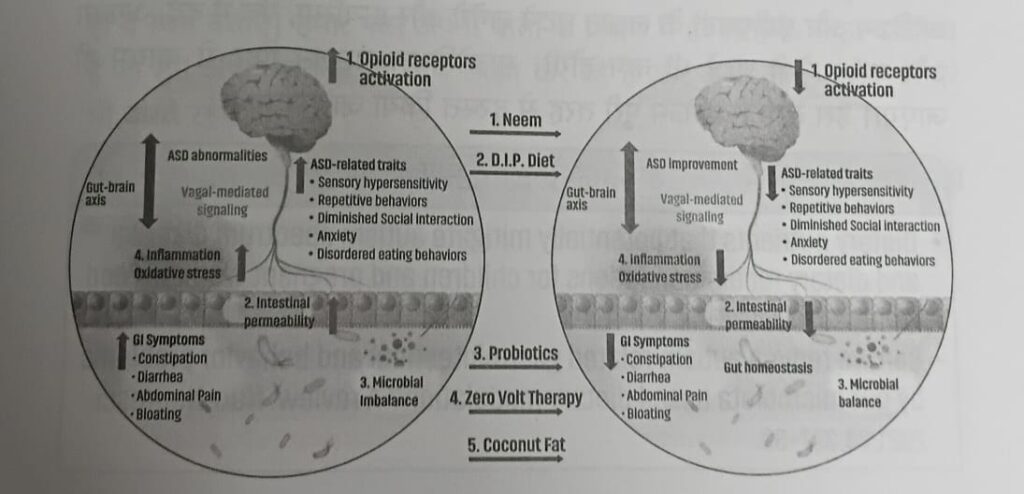
▶ Mechanism should be correct
As I mentioned, there are four factors in the gut-brain axis that alter the symptoms of autism and ADHD. You should also understand that children with ADHD, or attention deficit hyperactivity disorder, often have some gastrointestinal symptoms in addition to these symptoms.
These children often suffer from constipation and poor bowel movements. Diarrheal is common. Abdominal pain and bloating may occur. Their digestive system is severely impaired, and they have more digestive problems than normal children.
To eliminate these stomach problems from the root, you will have to include the following things which are mentioned in our second model:
1. Neem
2. DIP Diet
3. Probiotic Drink
4. Zero Volt Therapy
5. Coconut Fat
If these are incorporated into a child’s diet and routine, their internal mechanisms will change. Opioid receptor activation will decrease. Symptoms of autism and ADHD will begin to diminish, and issues like diarrhea, abdominal pain, bloating, and constipation will also decrease. Microbial balance will be restored, and this way, the system can be completely repaired.
| Group brain axis |
| Dietary nutrients that potentially mitigate autism spectrum disorder and dietary recommendations for children and pregnant women. Food Fronts. 2024,5:920-46. Can we reduce autism-related gastrointestinal and behavior problems by gut microbiota based dietary modulation? A review. Nutr Neurosci. 2021;24.327-38. |
▶ Restful sleep
In this way, the gut-brain axis can be improved. The gist of everything we’ve discussed so far is that if we encounter a child with a neurodevelopmental disorder, we need to educate their parents about these five factors so that the child’s life is completely free of the disease and positive changes can be seen.
These changes will be so magical that parents never dreamed they would. They may have even given up hope that their child would someday speak properly, that their hyperactivity would disappear.
Such children struggle with proper sleep at night. By adopting these measures, children will be able to sleep deeply at night, and their parents will also have the opportunity to sleep peacefully with them after many years.
| Group brain axis |
| Diet: the keystone of autism spectrum disorder? Nutr Neurosci. 2019;22:825-39. Understanding the link between gut microbiota, dietary intake, and nutritional status in children with autism and typical development Front Nutr. 2023;10:1202948. |
Here are some more research papers of what we have learned so far.
A method either works or it doesn’t. There are only two ways to prove it: find written evidence that it works, or have people who have experienced it first-hand tell us. We have all kinds of evidence to support our claims, which we’re sharing with our readers and will continue to do so in the pages to come.
Now we move on to Part 2 which will discuss what we should not do.
Part 2
What not to do?
Many times, parents unknowingly harm their child instead of doing them good. While the child may be suffering from symptoms of autism or ADHD and have physical impairments, misguided parents continue to do things they hope will improve. However, the parents and child experience nothing but physical, mental, financial, and emotional distress, and the child’s problems remain unaddressed.
If any parents are planning to have a child or a woman is pregnant, you can share these things with them so they can be alert and vigilant in time. Families where this still happens can benefit their children by eliminating these factors. They can improve their lives by permanently eliminating their disorders.
| Weighted Blanket Therapy |
| Do weighted blankets improve sleep in children with an autistic spectrum disorder? Archives of Disease in Childhood, (2013), 98(11), 919-920. Weighted blankets and sleep in autistic children-A randomized controlled trial. Paediatrics, (2014), 134(2), 298-306. |
I’ll be covered with a 14-pound blanket, and then told that just sitting still is the first sign of improvement in my symptoms.
Parents of autistic children often struggle with where to seek treatment for their child. They go to psychiatrists, neurologists, and then are referred to autism specialists. They are recommended various therapies.
The therapy of wrapping a child in a blanket and patting them is believed to improve the child’s condition. This therapy will continue for years. If you look at the evidence, you’ll understand that this therapy provides no benefit. If the autistic child doesn’t benefit, who benefits? The only person benefiting from this is the therapy centre, where the child’s parents regularly come to have their child treated.
| Weighted Blanket Therapy |
| Mosaic Weighted Blankets. (2014). How do weighted blankets work? Retrieved February 18, 2017, Exploring the safety and therapeutic effects of deep pressure stimulation using a weighted blanket. Occupational Therapy in Mental Health, (2008). 24(1), 65-88 |
▶Extremely expensive and futile therapies
An entire industry has been built around autism. Therapies are so expensive that parents are severely impacted financially by this fraud masquerading as a cure. They invest their life savings in the hope that their child will recover, but despite the investment of money, time, and attention, their child finds no relief.
Consider this: If an autistic child is asked to wear weighted blankets, use clothing or coverings that are heavier than they are comfortable with, and is subjected to this routine for several hours each day, can this actually improve autism symptoms?
Clearly, this is just false hope. There’s no scientific basis for it, and it’s causing more harm than good. Based on the outward symptoms of a problem, instead of just working around it, we need to attack the root causes, which isn’t done in these circles. We have a protocol to address this problem that can eliminate it once and for all.
| Occupational therapy |
| Occupational therapists’ reported experiences using weighted vests with children with specific developmental disorders. Occupational Therapy International, (2004). 11(1), 52-66.The use of weighted vests with children with autism spectrum disorders and other disabilities. Journal of Autism and Developmental Disorders, (2009), 39(1), 105. |
▶ Occupational Therapy
Occupational therapy involves placing heavy shackles on the child’s feet, and reassuring the parents that this therapy will help the child recover and improve their autism and ADHD symptoms.
The right answer always lies with evidence or a scientific explanation, which is missing in this case. Using heavy blankets, clothing, or weights is simply robbing parents of their money; the child receives no benefit. On the contrary, it is nothing less than mental torture for the child. Through these therapies, they are repeatedly convinced that they are not a normal child and therefore, they are being treated differently.
Just imagine, if someone made us wear a blanket like this or treated us this way, we might become hyperactive too. The very thing we sought treatment for is being further promoted. This is how the autism industry makes money. It’s flourishing day and night. If parents are aware and educated about this issue, they can avoid being misled in this way.
| occupational therapy |
| Effectiveness of sensory integration intervention in children with autism spectrum disorder: A pilot study. |
| American Journal of Occupational Therapy, (2011). 65(1), 76-85 |
▶ Autism Specialist?
You’ll notice that we’re talking about what we, as parents or guardians of a child with autism, shouldn’t do. We shouldn’t go to any kind of therapy centre and give our autistic child any therapy, such as speech therapy or occupational therapy, even if it’s offered under a different name.
This is standard protocol at therapy centres, for which they have completed four-year degree programs. They call themselves autism specialists, but what are they actually doing? They’re covering children with blankets in the name of therapy. They’re dressing them in clothes that look like bulletproof vests. Then they hope that somehow, by some magic, the children’s mental health will improve. But what does the evidence say about this? The evidence is completely contrary to their expectations. Such therapies don’t improve the child’s condition.
| Mental vs Physical Sound Therapy |
| Brief report: The effects of Tomatis sound therapy on language in children with autism. Journal of Autism and Developmental Disorders, (2008). 38(3), 562-566. Sleep patterns in children with autistic spectrum disorders: A prospective cohort study. Archives of Disease in Childhood, (2014). 99(2), 114-118. Addressing sleep disorder of autistic children with Qur’anic sound therapy Health, (2013), 5(88), 73-79. |
▶ Sound Therapy?
Another such therapy is sound therapy. Sound therapy involves playing different types of music to the child, with the hope that playing a specific type of music with a specific vibration will benefit the child.
Speaking of parents of children with autism, you all know that when it comes to their child, they’re willing to go to any lengths. Just give them hope that their child will get better, and they’ll do anything. They’ll spend any amount of money.
Getting entangled in these webs not only disturbs the parents but also demoralizes the child. Nothing comes to fruition, and the child’s condition worsens. Visiting these places only makes the child feel more like they’re not like other children, and this further demoralizes them. Our research paper presents the true picture before your eyes, and there’s no doubt about it.
| Behavioural therapy |
| Behavioural and developmental interventions for autism spectrum disorder |
| Behavioural and developmental interventions for autism spectrum disorder: A clinical systematic review. PLoS One, (2008). 3(11), e3755. |
Occupational therapy, speech therapy, sound therapy, behavioural therapy—you name it—all of these have been subjected to clinical trials. Clinical trials mean, for example, 100 autistic children, 50 of whom received behavioural therapy, and 50 received no therapy. They were then followed up for two years. Was there any difference between the two groups? The answer was no difference.
It’s crucial for parents of autistic children to know what they shouldn’t have their children do, what therapies they shouldn’t include them in, or what they can do to benefit them and bring positive results to their lives.
Many parents have tried every possible treatment for their autistic children for years and have been in vain. They now seek a treatment that can bring about positive changes within a few days and, over time, completely free their children from autism and ADHD.
Part-3
C.A.N. Timeline
We will now move on to the third part of our module, called the C.A.N. Timeline (Cure Autism Now Timeline). This will explore how readers can apply what they have learned so far to the life of a child with autism to achieve the desired results.
In this episode, we’ll learn about this step-by-step: how to incorporate essential elements into a child’s lifestyle. How to create a conducive home environment that can help them overcome their disorder and integrate into mainstream society, all in a very short time!
| C.A.N. Timeline |
| 5 a.m. – Grounding and sunshine 7 AM – Neem Therapy (1 gram per 10 kg body weight) 8 am – Fruit snack (body weight in kg) x 20 = … grams 11 am – Timings may be changed, Fermented drinks (100 ml per 10 kg) Lunch at 1 p.m. |
| Plate-1 Raw Vegetables Body weight (kg) x 5 = … grams > + Plate-2 Cooked Food |
| 4 pm: Fermented drinks 7 pm: Dinner (same as lunch) Anytime Meals (7 AM to 7 PM) coconut based dishes 1 gram of coconut oil per kilogram of body weight 9 pm: Sleep on zero-volt bedsheets |
▶ Follow the Sun
You can see in the picture what to do in the can timeline, but we will
I’m going to discuss this in detail. You need to start this at 5 a.m. The first and most important thing is grounding.
Parents of an autistic child should try to ensure that their child follows the rule of ‘follow the sun’ in which only they can help him.
“Follow the sun” means that your child should wake up with sunrise and plan their daily routine around it. This is important because the sun has a special and deep connection with your body’s circadian rhythm.
▶ Circadian Rhythm
Readers may be wondering what a “circadian rhythm” is. In fact, every part of your body has a pre-established timetable. A routine is already established. Just like a family consists of many members: parents, children, and grandparents: everyone has their own routine. A child will wake up in the morning, refresh themselves, have breakfast, and go to school. They will return by the school bus at two in the afternoon. Then they will go to tuition at three. They will go out to play at five, eat dinner at seven, and then sleep until nine in the night. They will follow the same routine again the next day. This routine, which is repeated over a twenty-four-hour period, is called circadian rhythm.
Similarly, our bodies also have a circadian clock. Just as a child has a 24-hour circadian clock, or timetable, his father will have a different timetable. He too will wake up in the morning, get ready, have breakfast, and then head to the office, or wherever he works. Then, he will return home by 7 or 8 p.m. He will eat dinner and sleep until 10 p.m., and then wake up the next morning as usual. So, this is his fixed routine.
Similarly, the entire family has a fixed routine. They all live under the same roof, but they have separate schedules and work in harmony within their own routines. They take care not to disrupt the routines of any other member.
Similarly, your body also has organs like the heart, brain, intestines, kidneys, etc., which operate according to their own timetables. Their timetables do not disrupt or interfere with the timetables of other organs. If you disrupt their timetables or the body’s circadian clock, the body becomes a breeding ground for diseases. If you correct that circadian clock, diseases begin to heal automatically.
▶ New-born circadian rhythm
This circadian rhythm is formed in a child’s life when they are born. At the time of birth, their heart, lungs, and brain are not coordinated with each other, and the body’s circuitry is not yet formed. That’s why you must have noticed that a new-born baby doesn’t have a fixed time for crying, sleeping, eating, or drinking. They fall asleep at any time, defecate at any time. They start crying at any time, drink milk, and then go back to sleep. This happens because their body’s circadian rhythm hasn’t yet formed. Then, gradually, their circadian rhythm develops, and the sun plays a crucial role in creating this rhythm.
▶Circadian rhythms and sunlight
When a baby’s eyes are exposed to sunlight, they infer that it’s daytime, and when they are exposed to darkness, they realize that it’s night-time. This way, their body begins to develop a circadian rhythm.
Similarly, we see that a child begins to go to sleep and wake up at the same time as their parents. They wake up with them. They get hungry at specific times. Potty training times become fixed. Similarly, they also develop a routine. This is called a child’s circadian rhythm.
▶Artificial lighting – a constraint
Light exposure is crucial for any baby’s birth, but sadly, when a baby is born in a hospital, they receive artificial or man-made light, not sunlight. This light is the same whether it’s day or night. The brightness of the light can’t tell if it’s day or night outside the window.
In a hospital setting, a newborn doesn’t know whether it’s day or night, or the lights always create the illusion of daytime. This is why it takes several months for a human baby to fully stand on its own two feet, or to learn self-control.
▶ Difference between human and animal newborn
In this context, consider a baby animal. When it’s born, it falls to the ground and stands upright. It can fend for itself. It doesn’t require much care and becomes independent. However, it takes a human baby a long time to learn to eat with its hands. It takes a few months to learn to stand, go to the toilet, or do other things. Some children take years, not days, months, or years, to master these basic tasks. Some children may not teach them their entire lives. Such children suffer from autism or ADHD.
The circadian clock is the key factor here, and it’s the most important factor: first, sunlight, the cycle of light and dark, and then grounding.
▶ zero voltage
Every living creature on Earth touches the earth as soon as it is born, and the earth’s electrons enter its body, determining its circadian rhythm. Remember, the earth’s voltage is considered zero?
The touch of the earth and sunlight together determine their rhythm. If a baby animal is born at night, its eyes first encounter darkness, and its brain understands that it is night. The brain starts working accordingly. But even when a human baby is born at night, it is surrounded by artificial light, so its brain cannot understand that it is night. This is why it is more delicate than the babies of any other animal and requires the most care.
▶Artificial and natural life
It takes a long time for her to find some real-life sunlight and grounding. Especially in families where cement is a source of luxury. Those children experience sunlight and the touch of the earth much later. However, if we talk about poor or middle-class children, they don’t have any comforts or luxuries, and they are much stronger and more powerful than children from upper-class families. They stand on their own feet early. They know how to take care of themselves. They can withstand all kinds of weather, meaning their body’s immune system keeps them fit in every season. They rarely fall ill, recover quickly, and live longer.
On the other hand, parents who keep their children away from sunlight, away from a life of simplicity and naturalness often have children who suffer from illness. Surrounded by everything artificial and man-made, children who are isolated from nature are more likely to develop neurodevelopmental disorders like autism and ADHD.
▶ The importance of sunlight and grounding
My first message is to follow the sun, that is, to establish a routine based on its rising and setting. Your child needs to follow the sun. Wake him up with the sunrise. The first thing he gets in the morning will be a balm for him.
When your child wakes up, take them to a sunny spot and let their bare feet touch the ground. Encourage them to play barefoot in the mud or grass. This combination of sunlight and grounding works like a life-giving herb. Repeating this instruction is not enough, as it holds immense significance.
I even believe that if parents have to take time off from work to do this for their children, they should definitely do it. Just as they’ve been investing money and time in various therapies, they should simply give their children a few days of time. Bring them closer to nature.
Parents who are frustrated by their child’s lack of improvement in autism symptoms despite various therapies are encouraged to try sun exposure and grounding for a few days. It will be nothing short of miraculous to see a change in their child within a few days or weeks.
You should set aside time in the morning for grounding and sunlight. This will be beneficial for your health as well. This grounding should be the first step, as you wake up at 5 a.m. and take your child out into the open sunlight.
▶ Neem Therapy
After that, the child can be scheduled for neem therapy at seven or eight in the morning (depending on the child’s convenience). As I mentioned earlier, the dose is one gram of neem for every ten kilograms of the child’s weight. If the child weighs ten kilograms, you can use one gram of neem powder. Dissolve it in a little lukewarm water and give it to the child to drink. This will be the second step. After that, it will be time for breakfast.
▶ Fruit Snacks
The time for fruit snacks can be an hour or two later, or even at the same time. Decide this time according to the child’s convenience. Just remember that according to the DIP diet, the child’s snack should consist of fruits only. You can take three or four types of seasonal fruits. Apples, oranges, bananas, or grapes. Any locally available fruit can be taken. There is no restriction on this. All fruits are priceless gifts from nature, and we should not deprive our children of this gift of nature. Include only those fruits in the child’s snacks which the child eats happily, which he likes, or which you can feed him.
You don’t necessarily need to buy three or four kinds of fruit. You might only be able to afford one or two, so stick to that. The point is, you should only feed your child fruit for breakfast; the type and quantity will depend on how much you can manage.
▶Seasonal and inexpensive fruits
We don’t recommend feeding them out-of-season fruits sold in air-conditioned malls. Feed them seasonal fruits, mixed with what your area produces. These fruits won’t be very expensive and will be much fresher than other fruits.
▶ Amount of fruits
The calculation of how much fruit children should eat is crucial. This calculation is especially important for children up to ten years of age. At this age, children’s metabolism is higher, so a larger amount can be given. For example, if a child weighs 30 kilograms, multiply it by 20, resulting in 30 x 20 = 600 grams. Your child should have approximately 600 grams of fruit by 12 noon. If your child is unable to eat 600 grams, reduce this amount to 500 grams or 450 grams. Our goal should be to feed them approximately 600 grams of fruit. Each child’s eating capacity is different. Some children will easily eat 600 grams of fruit, while others will eat less. Fruits should be fed according to this calculation; slight variations may occur depending on the individual child.
▶ Changes in calculations
Children over the age of ten are growing children, meaning they are between the ages of ten and eighteen. This calculation will vary slightly. Let’s say the child weighs 40 kilograms, multiplying by 15. This gives 40 x 15 = 600 grams.
What are these? Grapes. Gar fruit
Then, as age increases, the calculation becomes something like this: Suppose someone is 30 or 40 years old, then their weight would need to be multiplied by 10. For example, if someone weighs 50 kilograms, they would need to eat 50 × 10 = 500 grams of fruit. As we age, our metabolic rate decreases, so this calculation changes accordingly, and this is consistent with the DIP diet. In this way, you can give your child fruit to eat until 12 o’clock, according to their wishes and convenience.
▶Fermented drink Ambli
After breakfast and before lunch, you can serve fermented drinks, called ambali, at any time, depending on your time and appetite. You’ll also learn what ambali is and how to prepare it.
The amount of Ambali you should give will depend on the type of Ambali. For now, let’s assume you can give half a glass of Ambali to a small child. This means that if your child weighs 20 kilograms, you can give them a cup of fermented probiotic drink before lunch. This routine is only possible if your child is at home and you can schedule their meals and drinks accordingly. We’ll discuss this in more detail later if your child is about to go to school.
▶ How long should the routine continue?
How long should this routine last? If your child is still at home, start it immediately, and you’ll start to see results. Within a few months, you’ll notice how much your child’s symptoms have improved. After that, you can add some flexibility to your routine if you wish. For now, give your child your time and trust in this routine with complete confidence. When your child appears to be improving, you’ll be encouraged and will follow it yourself.
▶ Lunch Plate-1 & 2
Next, we move on to the lunch plate. You have two lunch plates—Plate 1 and Plate 2. According to the DIP diet, Plate 1 includes raw vegetables. You can also call it a salad. It includes tomatoes, cucumbers, radishes, carrots, cucumbers, peas, lettuce, red and yellow bell peppers, beets, and onions.
▶ Total amount of raw vegetables
We have been blessed with raw vegetables from nature that can be eaten raw. They are not only delicious but also a treasure for health. The total quantity should also be considered. You should determine the quantity of three or four types of raw vegetables according to the child’s weight. Let’s assume that the child weighs around 30 kg, then you should multiply it by 5, that is, 30 x 5 = 150 grams of raw vegetables. The child should be fed at least this much raw vegetables; consider this as the minimum quantity. If you feel that the child is eating them with taste and ease, then he can eat a little more.
> Child eats heartily
It’s also possible that your child may refuse to eat them, may not like their taste, or may be very fussy about food and drink. Don’t force them. Anything benefits our bodies only when we embrace it wholeheartedly. Parents are urged to try and find a way to feed their children these salads. Every mother knows what her child enjoys most, and recipes can be tailored accordingly so they can comfortably eat raw vegetables. We’ve included some such recipes later in this book to help. Whatever is beneficial for your child, they should be fed, and I know that parents can do this very well.
▶ Lunch Plates-2
So, after feeding your child the prescribed number of raw vegetables on Plate 1, it’s time for Plate 2, the second plate where we can offer cooked food. This includes simple meals typically prepared at home, such as lentils, rice, and roti.
Speaking of bread, it’s important to remember that you shouldn’t give your child bread made from wheat flour. You should feed your child bread made from millet or zero-grain flour. You’ll find more information about how these flours are prepared below.
You can serve any lentils or vegetables you’ve cooked at home. You can also offer South Indian dishes like idli and dosa. This will be our Plate 2. This will complete your child’s lunch.
▶ Balancing the weight of plate 1 and 2
Another thing to keep in mind is that the total weight of Plate 1 should always be greater than that of Plate 2, meaning the salad will be greater and the cooked food will be less. I’m not suggesting he eat less. You should give him the minimum amount of raw vegetables and cooked food, and after that, he can eat as much as he wants. If he can’t eat more salad, at least the two plates should be equal in size.
This timetable must be practically implemented. Parents’ imagination and creativity will help make it even simpler to implement, and the recipes in our next module will be of great help.
Now, let’s move on to lunch in our timeline. Let’s assume we’ve served lunch to our child by one or two o’clock. This time can be slightly earlier or later depending on your child and your convenience, but make sure your child has eaten according to the DIP diet by noon.
▶Fermented drinks between lunch and dinner
Between lunch and dinner, give the fermented drink Ambli, which we gave between breakfast and lunch. You’ll need to get your child used to drinking it. It’s very beneficial for the stomach, and you’ll learn more about it later. The dosage remains the same as previously mentioned.
▶ Dinner timing and circadian rhythms
Next, we’ll talk about dinner. If we consider the circadian rhythm, everyone’s eating routine should be set within a twelve-hour window. For example, if they’ve been eating since 7 a.m., their last meal should be around 7 p.m., and they shouldn’t eat anything until 7 a.m. the next day.
When we adapt to our body’s circadian rhythm, many diseases heal spontaneously. The body’s microbiome improves. Sleep becomes deeper and better. We’ll discuss this in detail, but for now, I want to say that parents should try to ensure their child’s dinner is complete by 7 o’clock or, at the latest, 8 o’clock.
What should be included in your child’s dinner? Dinner should be the same as lunch. The same rules apply for lunch. You should not give your child anything to eat after this dinner. Some people eat before sunset, so practically we can’t have your child eat dinner until six o’clock. But try to have dinner by eight o’clock so that the digestive system has time to recover until morning.
▶ Coconut Fat Content?
Children crave to eat something or the other several times a day, you can prepare and feed them something between 7 am and 7 pm, like you saw the fifth factor – coconut fat.
Plant-based fats are essential for your baby’s health. You can feed them in any form. A piece of coconut isn’t something your baby will eat often, so we’ve provided several recipes in Module 3 to make your job easier.
How much coconut fat does your child need daily? Although the fat you fed him for lunch and dinner also contained plant-based fats, the calculation for his total needs would be as follows. Assuming his child weighs 20 kilograms, he should consume 20 grams of fat daily. This way, you can ensure he’s getting his full daily allowance.
The next module will include recipes that are both delicious and perfect for snacks, lunches, or dinners. Coconut can also be included as a snack, as it’s a fruit.
▶ Amount of Coconut Oil
If you prefer, you can also give your child coconut oil. How much should you give? Depending on your child’s body weight, you can give one gram of coconut oil per kilogram. If your child weighs ten kilograms, you’ll need to give them approximately two teaspoons of coconut oil.
You might wonder how to administer this oil. There are several ways to do this. Drizzle a little coconut oil over any salad you’ve prepared, or simply spoon it in. A 20-kilogram child should include 20 grams of coconut oil in their daily diet.
Some recipes are also provided below. Just remember to follow these basic guidelines.
▶Zero Volt Bedsheets for Better Sleep
We assume that a child will get enough sleep only if they go to bed at 9 p.m. When they go to sleep, they should be placed on a zero-volt bedsheet. What is a zero-volt bedsheet and how is it made? We’ll learn more about this later.
The basic principle of a zero-volt bedsheet is to thread a copper wire through an ordinary sheet. This means that if someone sits on the sheet, the copper will touch their hand. Leave one end of the copper wire in a corner, and bury the other end outside in an open area, extending it through a window. We’ll discuss how to prepare it in detail later.
As I mentioned earlier, children with autism and ADHD don’t get enough sleep. Adequate sleep reduces their hyperactivity and improves their intellectual abilities, so you should do your best to ensure they get enough sleep. When they get enough sleep, their problems will significantly reduce.
▶ Follow the Sun: A child’s routine with nature
Just remember, ‘Follow the Sun.’ Your child’s daily routine should follow the sun. You need to make sure dinner isn’t eaten too late after sunset. While seven o’clock is fine, if that’s not possible, consider eight o’clock the optimal time limit. Anything you feed your child after that won’t be good for him. In fact, it’s not good for anyone. Even adults should have dinner between seven and eight o’clock. Failure to do so disrupts your body’s metabolism.
So, let’s continue with “Follow the Sun.” First, get up and walk barefoot in the mud, soaking up the sun. After sunset, reduce your food intake and stop. Following these rules will improve your child’s sleep. His or her circadian rhythm will be restored. With these changes, your child will begin to recover.
▶Magical changes will come
These children often experience constipation, diarrhoea, IBS, and lower abdominal pain, which will begin to improve and then disappear completely. These effects become noticeable within two to three days.
The next magical change you’ll witness is that your child, who has been speechless due to autism, will begin to speak. They’ll speak in short sentences. They’ll respond to your words. If someone asks them their name, they’ll confidently say it.
Your child’s hyperactivity will decrease. His awkward hand movements will decrease. You’ll begin to notice that he’s behaving like a normal child. The behaviours that used to set him apart from others will diminish.
▶ Sleep Chart and Importance of Sleep
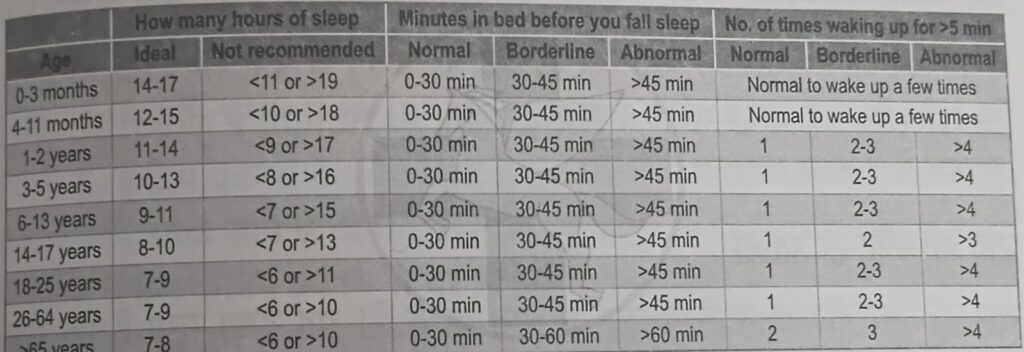
You have to understand the important role of sleep. The given picture shows you a sleep chart. In this you can see that children between 0 to 3 months sleep the most. They sleep for 14 to 17 hours but as they grow older, their sleep starts decreasing. By the age of 11 months, they start sleeping for 12 to 15 hours. By the age of 1 to 2 years, they sleep for 11 to 14 hours and then by the age of 5 years, their sleep reduces to 10 to 13 hours. Let us assume that if someone is an adult, then his sleep will be between 7 to 9 hours.
As we age, our sleep decreases. Our metabolic rate slows. If a child or adult sleeps too much or too little, both indicate a disruption in their sleep pattern. This is called disturbed sleep. This can disrupt the gut-brain axis, leading to various diseases. Sleep is therefore a crucial factor for these children. Their parents know how many sleepless nights they’ve spent because their child can’t sleep properly. Their sleep is frequently interrupted, even for no apparent reason.
▶ Disruption of sleep patterns
If a child or adult falls into a deep sleep within 30 minutes of going to bed, their sleep pattern is considered normal. If someone has trouble falling asleep and tries to fall asleep for a full 45 minutes, their sleep pattern is impaired. If someone remains in bed for an hour and still cannot fall asleep, their sleep pattern is considered severely impaired and needs improvement.
There will be an immediate need for this otherwise it will invite many types of diseases.
One benefit of following the timeline I’m sharing is that your sleep patterns will magically change. Your baby will get plenty of sleep, and their behavior will change rapidly.
▶waking up at night
Now let’s talk about waking up at night. It’s been observed that even a normal, healthy person wakes up around midnight to go to the bathroom. This may happen at two or three in the morning. Waking up once, going to the bathroom, and then going back to sleep is normal. Waking up twice a night to go to the bathroom would be considered borderline abnormal, and waking up three or four times a night would be considered abnormal. This disrupts sleep.
A sleep chart will help you understand your sleep patterns. Sleep well and your life will change dramatically; that’s all you need to remember.
‘Follow the Sun and Get Plenty of Sleep’
Follow these two rules and get them followed – your entire family including your child will be able to live a healthy life.
| circadian clock |
| Association of lamplight exposure and sleep duration during sleep with attention-deficit/hyperactivity disorder among preschool children in China. |
| Associations of lamplight exposure during sleep and sleep duration with attention-deficit/hyperactivity disorder among preschool children in China. Frontiers in Psychiatry; Volume 15-2024 |
▶ Importance of the circadian clock
We’ve already given you some information about the circadian clock or rhythm. Here, you can see a very important piece of research on this topic. While thousands of studies have been conducted on this topic, this one is very interesting and important for parents of children with autism to understand.
If children with autism or ADHD stay up late at night and are exposed to artificial light, their circadian rhythm gets disrupted. You should remove them from mobile or TV screens two hours before bedtime to avoid this artificial light. Keep their bedroom dimly lit. We all know that our children, regardless of age, are unknowingly captivated by mobile phones, TVs, and the internet.
Parents often hand their children mobile phones for their own comfort and convenience. Sometimes, children can’t even see or understand anything, yet they remain captivated by the constantly playing reels on social media, unable to lift their hands from their mobile phones for hours. If you want to keep your child healthy and give them the gift of health, then instead of mobile phones and the internet, give them the company of yourself and nature. Keep them close to nature, away from artificial light.
The more exposure they have to bright artificial light before bedtime, the more difficult it is for them to fall asleep. The more sleep disorders they experience, and this link leads to changes in their behaviour. Behavioural disturbances are more common.
| Circadian clock |
| Disruption of circadian rhythms and risk of autism spectrum disorder: role of immune-inflammation, oxidative stress, metabolism, and neurotransmitter pathways. |
| Disruption of circadian rhythm and risk of autism spectrum disorder role of immune-inflammatory, oxidative stress, metabolic and neurotransmitter pathways. Rey Neurosci. 2021 May 28:33(1):93-109 |
This research paper also states that if a child’s sleep pattern is disrupted, their circadian rhythm will also be disrupted. This leads to neuroinflammation and various types of inflammation in the body. This inflammation is what keeps a child autistic or suffering from ADHD. So, you can see how these seemingly trivial things can make a huge difference in a child’s life. Therefore, it is crucial for parents to understand and implement these principles in their child’s life.
| Circadian clock |
| The role of late-night eating in circadian disruption and depression: a review of emotional health implications. |
| Role of late-night eating in circadian disruption and depression: a review of emotional health impacts. Phys Act Nutr. 2025 Mar;29(1):18-24, |
▶ Importance of natural light
Minimize exposure to artificial light after sunset and maximize exposure to natural light after sunrise. Even if the child is indoors, keep windows and doors open to allow sunlight and sunlight to enter the house. If opening windows is not possible, remove curtains.
Don’t create a home environment where you have to keep the lights on 24 hours a day. By following this rule, your circadian clock will begin to adjust, and combined with other factors, you’ll begin to achieve the desired results.
If you’d like to understand and apply the information I’ve shared about the circadian clock or rhythm in more detail, read my book, “The Circadian Doctor.” We encourage all our patients, regardless of their lifestyle-related illnesses, such as diabetes, hypertension, cancer, heart disease, chronic kidney failure, extreme weakness and fatigue, to strictly adhere to the rule of not eating after sunset. By abstaining from eating after 6 p.m., we see rapid improvement in their condition.
Within seven to ten days, their blood sugar and blood pressure begin to drop. Their stomach problems begin to ease. Digestion improves. Sleep improves. Within twenty to twenty-one days, their inflammatory diseases, such as joint pain, begin to resolve. We have observed these changes in our clinics, hospitals, and in our patients. The same principles that apply to lifestyle-related disorders also apply to children with autism or ADHD. If you would like to learn more about this topic with evidence, my book, “The Circadian Doctor,” can be very helpful.
So, what’s our conclusion? Follow the sun. Walk with the sunlight, follow our guidelines. Implement neem therapy. Start giving probiotic drinks while following the DIP diet. Incorporate plant-based fats into these children’s diets. These same guidelines will be beneficial for other neurodevelopmental
and muscular disorders. They have always worked and will always work.
| Comparative Chart of Major Childhood Conditions |
| Conditions Type Primary Affected Area Cerebral Palsy (CP) Neuromotor Disorder (Brain damage before/during birth) Muscle Control & Movement Dyslexia Learning Disorder Reading & Language Processing Down Syndrome Genetic (Chromosome 21 Trisomy) Physical & Cognitive Development Muscular Dystrophy Genetic Muscle Disorder Muscles |
▶ C.A.N. Protocol: Many Diseases, One Solution
cerebral palsy
Another condition in this context is cerebral palsy. In this neurological disorder, children’s mental health is fine, but their muscle coordination is poor. They experience this problem from childhood.
Why do they have these symptoms from childhood? Their pregnant mothers may have been given excessive amounts of paracetamol, antibiotics, or other medications. They may have received numerous injections or vaccines; in such situations, if the pregnant mother was under a lot of stress, the child may develop these symptoms. Our C.A.N. protocol will work for these children as well.
Dyslexia
Similarly, we can consider dyslexia. It is a learning disorder in which a child has difficulty reading and understanding language. Other than this symptom, the child appears completely normal. Their behaviour is completely normal. They are also intelligent, but they struggle with calculations or reading. Such a child appears completely different from other children. Thus, the same protocol applies to dyslexic children.
Down syndrome
Down syndrome falls into the third category. This is considered a genetic disorder, meaning the child’s parents, grandparents, or great-grandparents are often blamed for the condition. It’s believed they inherited the disorder from their ancestors.
If this is true, then just imagine, were there children with Down syndrome 40-50 years ago? Genetics certainly play a role of only 1%. After all those factors are factored in, the likelihood of a child being born with Down syndrome increases.
The physical and mental development of a child with Down syndrome differs from that of other children. It is very rare. Apply the same CAN protocols to these children.
Muscular dystrophy
Next come patients with muscular dystrophy, which has also been given a genetic diagnosis. We have observed that when these patients are given the same protocol, they also begin to recover.
We’ve also found that children with muscular dystrophy often develop an autoimmune reaction. You may recall the factors responsible for this: stimulants and animal proteins in food. However, some children are naturally resistant to all forms of gluten and animal protein, meaning their bodies tolerate these substances without any adverse reactions.
When all the factors (Model of Cause) are removed from their lifestyle, they start showing signs of improvement.
We have found that the degeneration that was taking place in their muscles, the coordination between their hands and legs which was earlier decreasing, starts improving.
Hopefully, you’ve learned that our C.A.N. protocol will also be effective and resolve these other conditions, in addition to autism and ADHD.
| Comparative Chart of Major Adult Neurological Disorders |
| Disorder Type Primary Affected area Key Symptoms Dementia Neurodegenerative Memory Thinking Behaviour Memory loss, confusion, Poor judgement, Personality changes Parkinson’s Disease Neurodegenerative Movement control Tremor, stiffness, slow movement, balance issues. Multiple sclerosis (MS) Autoimmune Brain & Spinal cord Vision problems, fatigue, Numbness, coordination loss. Epilepsy (Adult onset) Neurological (Electrical Activity) Brain Circuits Recurrent Seizures |
Similarly, among adult-onset diseases, it can be called dementia, neurodegenerative disease, or Parkinson’s. Parkinson’s disease causes hand tremors. Multiple sclerosis can also affect the legs, which is considered an autoimmune disease. However, the limbs become immobile. There is no control over hand movements. Furthermore, there is dysfunction of the brain and spinal cord.
Apart from this, you can also take up epilepsy; if the patient ever has an attack, then this C.A.N. protocol will be useful.
Now you must have understood very well that if we poison our body with the factors mentioned earlier, then the symptoms arising due to that reaction in the body are given some name or the other but their solution is not found It is. Knowingly or unknowingly, the body has to go through all the factors mentioned earlier. If all those factors are removed, then the diseases known by different names will start disappearing automatically.
Let us remind you once again that you must follow the sun. Your life should also follow the law of sunrise and sunset. Later in this book, we will share real-life experiences from parents of children with autism, describing how they adopted this protocol and the remarkable changes they saw in their children after just a week or two of following it. After this we will discuss Part-4 of our Module-2.
Part-4
Scientific consensus vs. conspiracy
▶ The Secret to Treating Autism and ADHD
So far, you’ve learned and understood why and how autism and ADHD occur. You’ve learned the mechanisms behind the evidence, and I’ve presented research papers to support everything I’ve told you.
Then you learned that whether it is autism and ADHD in children or neurodevelopmental disorders in adults by some other name, they can also be eradicated forever by following our protocol.
As I mentioned, in this book you will also find testimonials from some of those children.
After reading all this, the question that will surely come to your mind is: Why aren’t these technologies reaching the people? Why do we need to launch campaigns to make them accessible? If there’s a scientific consensus, then why is there a conspiracy? It’s a different matter how a problem arose or how to fix it. Now, the question arises: why aren’t these solutions reaching those who need them most? What is hindering this process?
| http://www.hsgac.senate.gov/ |
Impact of Childhood Vaccination on Short and Long-Term Chronic Health
Outcomes in Children:
A Birth Cohort Study
Lois Lamerato, PhD, Abigail Chatfield, MS’, Amy Tang, PhD’, Marcus Zervos, MD
Henry Ford Health System, Detroit MI
Department of Public Health Sciences
Division of Infectious Diseases
Wayne State University School of Medicine, Detroit MIP
Running head: Association of childhood vaccination on chronic health in children
Word Count: 292 (Abstract), 4143 (Body)
Corresponding Author: Lols Lamerato, PhD Senior Scientist
Objective: To compare the short and long-term health outcomes, within a captured payer environment, of children exposed to one or more vaccines to those unexposed.
Design: Birth cohort study
Setting: Integrated healthcare system in Michigan.
Participants: 18,468 children born between 2000 and 2016 enrolled in the health system insurance plan.
Main Outcome Measures: Development of a chronic health condition over time.
Results: A total of 18,468 consecutive subjects met eligibility criteria for the study, of which 1,957 had no exposure to vaccination and 16,511 had received at least one vaccine during their enrollment in the plan with various levels of exposure. After multivariate adjustment, Cox proportional hazards modeling demonstrated that exposure to vaccination was independently associated with an increased risk of developing a chronic health condition (HR 2.53, CI 2.16-2.96). Of the chronic health conditions, exposure to vaccination was independently associated with an increased risk of asthma (HR 4.25, CI 3.23-5.59), autoimmune disease (HR 4.79, CI 1.36-16.94), atopic disease (HR 3.03, CI 2.01-4.57), eczema (HR 1.31, CI 1.13-1.52), and neurodevelopmental disorder (HR 5.53, CI 2.91-10.51). There were no chronic health conditions associated with an increased risk in the unexposed group. The overall probability of being free of a chronic health condition at 10-years of follow up was 43% in the group exposed to vaccination and 83% in the unexposed group.
Conclusion: This study found that exposure to vaccination was independently associated with an overall 2.5-fold increase in the likelihood of developing a chronic health condition, when compared to children unexposed to vaccination. This association was primarily driven by asthma, atopic disease, eczema, autoimmune disease and neurodevelopmental disorders. This suggests that in certain children, exposure to vaccination may increase the likelihood of developing a chronic health condition, particularly for one of these conditions.
▶ Birth Cohort Study
To help you understand the consensus, I’m providing a link to a US government website, which you can see in the image below. It features one of the world’s largest studies, the Birth Cohort Study. You can see that it studied the effects of vaccination on children’s short-term and long-term health.
On one side, children were included who received a single vaccine or a full range of vaccines during childhood. On the other side, children were included who never received a single vaccine. When these children were followed up for an average of ten years, what similarities and differences were found in the health of both types of children? This study focused on how they differed.
▶ Study findings
If we go into the details of this study, we can see that 18,468 children were included in it, these were the children who were born between the years 2000 to 2016 and in the results of this study, it was found that among the children who were ever vaccinated, when they were followed for ten years, only 43% of them did not suffer from any chronic disease, whereas among the children who were not given any injection, 83% also did not suffer from any chronic disease.
The study concluded that vaccination doubles the risk of health harm. Only 17% of unvaccinated children developed some form of illness, while approximately 57% of vaccinated children developed some form of illness.
If the question comes to your mind: should we vaccinate our children or not? Why do we vaccinate? We think it will make our children less sick and increase their lifespan. But is that really the case?
To answer this question, consider the lifespans of vaccinated and unvaccinated children. This research paper shows that, contrary to popular belief, unvaccinated children were much healthier than vaccinated children. Those who were vaccinated were 250% more likely to develop diseases than other children.
▶The decision and responsibility are yours
If you, as a parent, are seeking answers to this question, the answer is right there. You just need to understand it and implement it. If you vaccinate your child, you are unknowingly exposing them to diseases because they cannot make their own decisions. At this age, you are the one making the decisions for them, so it’s your responsibility to make informed decisions.
A child can only express their protest by crying. When they’re given a vaccine, they cry and protest, but you coax them into getting the injection because you’ve been told it will keep them healthy, protect them from many diseases, protect them from infectious diseases, and extend their lifespan. Their health will be free of risk. Similarly, parents are coerced into getting their child vaccinated, citing the child’s well-being. But you can find the answer yourself from the research findings in this book.
▶ Other comparative studies
Similar comparative studies have been conducted before. This study was uploaded to the USA government website in September 2024. Many smaller studies have been conducted around the world, but this one was quite large. I mentioned some of these studies in Module 1. You can also view them on the website if you wish.
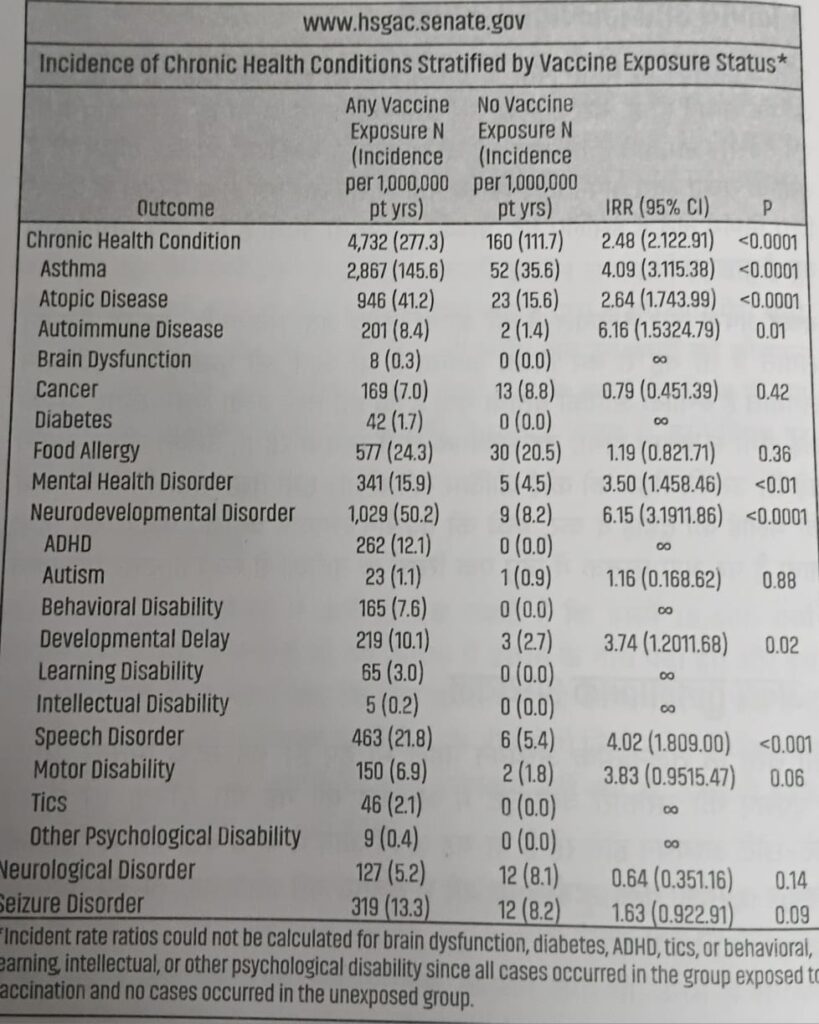
▶ Second part of the conclusion
This section provides the second part of the conclusion, which includes statistics on the diseases that occur in vaccinated children and those that do not.
If you look at the column titled ‘No Vaccine Exposure,’ you’ll notice that many categories have a zero number. This means these children did not develop diabetes, ADHD, or any behavioural, learning, or intellectual disabilities. No signs of mental or psychological impairment were found, meaning these are the same conditions that occur in vaccinated children.
The entire research paper is presented before you which has been taken from the government website of USA, hence its authenticity cannot be doubted.
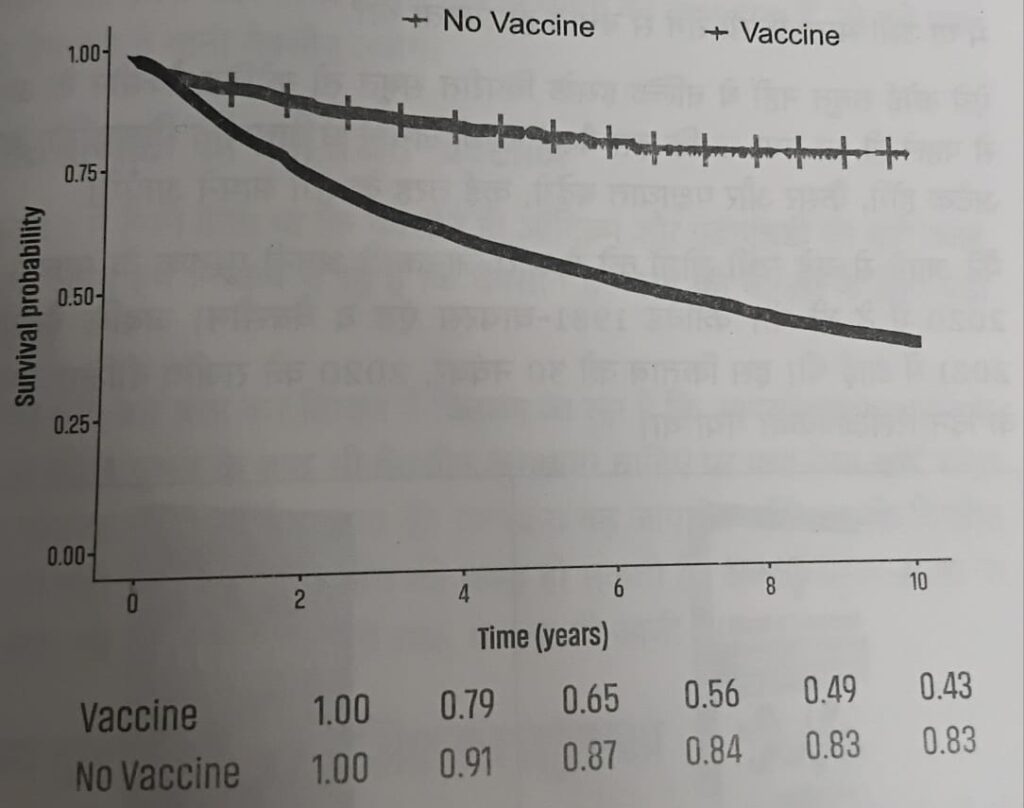
▶ Vaccine graph
If you look at the graph below, the top line represents children who did not receive the vaccine. The bottom line represents children who did receive the vaccine. Over a ten-year period, it was observed that children who received the vaccine had an increased risk of death as they aged, while those who did not receive the vaccine had a lower risk of death.
You’ve seen all the evidence yourself, so there’s no reason why you should vaccinate your child under any circumstances, for any reason. I’ve provided such evidence before. We have such evidence, yet children are still getting vaccinated.
▶ Covid Vaccine
Not just children, everyone is getting vaccinated. You’ve seen two doses administered in the name of COVID-19. You may have received the COVID vaccine yourself. So, did you have any evidence that taking it could prevent any disease in the future or at that time?
There was no such evidence, in fact, contrary evidence had already emerged before the Covid vaccine arrived that administering this vaccine would cause sudden death, heart attacks, increase cancer and paralysis, and many other diseases would emerge.
I shared all this information with everyone I knew through my book, COVID 1981 – The Virus and the Vaccine, in 2020. The vaccine itself was released in 2021. The book was released on November 30, 2020, Rajiv Dixit’s birth anniversary.
You can easily get this book online or if you want, you can also download it for free from our website.
The purpose of a vaccine is not to save a human life. It is a slow poison in itself, and I have explained this in detail. The book provides comparative studies of not only the COVID vaccine but also all other childhood vaccines. Readers can read them through the provided link if they wish.
Speaking of the COVID vaccine, it’s been a few years since it was introduced, and in that time, numerous research papers have been published worldwide. I compiled a book, “Vaccinated to Death,” by collecting 3,500 of those research papers. If you read this, you’ll know that the COVID vaccine has caused nothing but harm. Cancer rates have nearly doubled. Chronic kidney failure has doubled. Cardiac arrests have increased manifold. Various metabolic syndromes have increased.
The conclusion is that vaccines only benefit one person, the one who is making and selling them – the vaccine industry.
▶ The main cause of every disease is vaccine
In Module 1, we saw that vaccines are a major cause of autism and ADHD. Here, we conclude that vaccines are a major cause of all types of diseases.
You’re repeatedly told that you should get vaccinated after a dog bite or a nail prick. But is there any evidence that doing so will improve your chances of survival? On the contrary, the evidence suggests that the same vaccine can cause death. This often happens from time to time, but the news is completely suppressed.
▶ Trump exposes vaccine conspiracy
This is where our conspiracy theory comes in. Disregarding all evidence, you are repeatedly convinced of the importance of vaccines. Doctors are employed for this purpose, acting as agents.
Here’s a recent example. On September 22, 2025, President Trump announced in a press conference that the main causes of autism and ADHD in children are:
1. Childhood Vaccines
2. Ma was given paracetamol during pregnancy
These are the two main reasons. He not only stated this but also presented evidence. Upon this, the National Autistic Society, which considers itself the world’s champion of autism, along with the vaccine industry, the WHO, and MHRA Medicine, all joined forces against Trump. It’s worth noting President Trump’s role in uncovering the link between autism and vaccines. After his re-election as U.S. president, he hinted at a link between neurodevelopmental disorders like autism and ADHD and vaccines, sparking renewed discussion about the issue.
Trump specifically chose autism as a topic of discussion at a White House press conference in September 2025. He told the press that just a few decades ago, the rate was 1 in every 20,000 children. Then, it became 1 in 100, and today, 1 in every 31 children is autistic. Recently, it was discovered that in the United States, 1 in every 12 boys has autism. The situation is even worse in California, where the disorder is less common in girls. He blamed vaccines for this and argued that autism is not found in children who are not vaccinated. He cited the example of the Amish, a Christian religious group that rejects modern medicine, technology, and vaccines. Autism has never been found in these children. This can be gleaned from the following speech he delivered to the press:
| “The meteoric rise in autism is among the most alarming public health developments in history. There’s never been anything like this. Just a few decades ago, one in 10,000 children had autism, so that’s not a long time. And I’ve always heard they sell a few, but I think it’s a lot less time than that. It used to be one in 20, 000, then one in 10,000, and I would say that’s probably 18 years ago. And now It’s one in 31. But in some areas, it’s much worse than that, if you can believe it. One in 31. And I gave numbers yesterday for boys; it’s one in 12. I was told that’s in California, where they have, for some reason, a more severe problem But whether it’s one in 12 or one in 31, can you imagine? That’s down from one in 20,000 and one in 10,000. And now we’re at the level of one in 12 in some cases for boys. One in 31 overall. So, since 2000, autism rates have surged by much more than 400%. Instead of attacking those who ask questions, everyone should be grateful for those who are trying to get the answers to this complex situation. And the first day, all of these great doctors behind me were there. I told them, “This is what we got to… We have to find out.” Because when you go from 20,000 to 10,000 and then you go to 12, there’s something artificial. They’re taking something. And by the way, I think I can say that there are certain groups of people that don’t take vaccines and don’t take any pills that have no autism. That have no autism. Does that tell you something? You have certain groups, the Amish as an example: they have essentially no autism…” |
Even today, children around the world, even in India, remain unvaccinated for one reason or another. Many parents choose not to vaccinate their children. Additionally, many children living in remote, mountainous areas or those not included in the census remain unvaccinated. Whenever trials or research conducted worldwide comparing vaccinated and unvaccinated children, it was found that vaccinated children had a higher incidence of lifestyle-related diseases, such as heart disease, cancer, lung disease, kidney failure, type 1 diabetes, and autism. Furthermore, it was observed that vaccines did not prevent the very diseases they were intended to prevent. These children also exhibited a higher incidence of infectious diseases. Their immune systems were significantly lower than those of children who had never received vaccines. For example, you can refer to the three research papers given below.
| Vaccinated vs. Unvaccinated |
| “Analysis of Health Outcomes in Vaccinated and Unvaccinated Children: Developmental Delays, Asthma, Ear Infections and Gastrointestinal Disorders,” SAGE Open Medicine 8, (2020) “Preterm Birth, Vaccination and Neurodevelopmental Dis-orders: A Cross-Sectional Study of 6 to 12-Year-Old Vaccinated and Unvaccinated Chil-dren,” Journal of Translational Science 3, no. 3 (2017) “Health Effects in Vaccinated versus Unvaccinated Children,” Journal of Translational Science 7 (2021):1-11 |
▶ Trump’s denial
Media outlets around the world began claiming that Trump’s claims were baseless. There was no evidence for them. You can find proof of this on the White House website itself. Who refuted Trump’s claims? Those involved in the vaccine industry were the ones who refuted them. They collectively claimed there was no evidence for Trump’s claims, even though there was no evidence for their own claims. But whose voice was heard? Only those with the most money and power will be heard. Obviously, the vaccine industry has many times more money. Even Trump, considered the most powerful person in the world, was silenced.
▶ ‘Illusion of Truth’ Effect
The vaccine industry has repeatedly repeated its lies, relying solely on media hype and publicity, without any evidence. When the same lie is repeated multiple times, in different ways, by different people, it begins to seem true. This is what is known in psychological terms as the “illusion of truth” effect.
The vaccine industry, through various propaganda, has convinced people that vaccines are life-saving, whereas the truth is that vaccines are one of the leading causes of human illness, whether it’s diseases and disorders in young children or autoimmune diseases in adults.
To understand this properly, you have to look at how big the autism and ADHD industry is in India.
| Autism & ADHD Market in India (₹) |
| Sector Base Year Value Projection CAGR ASD Treatment (Drugs) ₹3,859 Crore (2022) ₹7,263 Crore (2030) 8.2% ASD Therapy Services ₹3,23,700 Crore (2025) 26,47,400 Crore (2031) 12.1% ADHD Therapeutics ₹44,654 Crore (2022) ₹99,185 Crore (2022) 10.5% |
▶ The Size of the Autism and ADHD Industry
In India, the industry involved in autism and ADHD, along with their medications and therapies, has an annual turnover of approximately Rs 4 lakh crore. This is a significant amount in itself. Compare this to India’s tuition and education sector. Children’s coaching institutes include major IIT-affiliated coaching institutes. If we combine all types of coaching, they together generate as much business as the autism and ADHD industry alone.
All the doctors and therapy centres that work in the name of curing autism together make a significant amount of money, and this business will nearly double in the next five to six years, i.e., by 2031. This will reach approximately eight lakh crore rupees.
This would mean that children with autism and ADHD would become more visible. How could this happen? Can children with autistic and ADHD disorders be created? I’ve already given you this answer.
As the years go by, the number of vaccines given to children is increasing. As time changes, children’s exposure to EMF is increasing. As time goes by, stimulants like MSG are increasing and children are consuming more fast food. Children are getting surrounded by electromagnetic radiation more and more. If we look at today, one in every 100 children in India is autistic, one in every 10 children is a victim of ADHD. This rate will double and increase rapidly. One in every 50 children Autism is going to increase, and 1 in 5 children will have ADHD. It’s all going to be terrible, and everyone will suffer.
When we face such a scenario, who will suffer the most? The parents and family members of such children will be the most worried.
| Family therapy |
| The relative risk and timing of divorce in families with children with an autism spectrum disorder. Journal of Family Psychology, (201024, 449-457 Group intervention for siblings of children with disabilities: A pilot study in a clinical setting. Disability and Rehabilitation, 34, 69-75. (2012). |
▶ Family Therapy
A new business model has emerged in Western countries to exploit the families of autistic children, calling it family therapy.
It’s important to understand that in the families of such children, their siblings suffer even more than the parents. They are completely normal, and the parents’ full attention is focused on the autistic child, so they feel isolated.
| Family therapy |
| Health-related quality of life in parents of school-age children with Asperger syndrome or high-functioning autism. Health and Quality of Life Outcomes, (2006). 4,1-8. Trajectories of emotional well-being in mothers of adolescents and adults with autism. Developmental Psychology, 47, 551-561. Hastings, R. P (2011). (2003a). Child behaviour problems and partner mental health as correlates of stress in mothers and fathers of children with autism. Journal of Intellectual Disability Research, 47, 231-237 Impairment of quality of life in parents of children and adolescents with pervasive developmental disorder. Health and Quality of Life Outcomes, (2007) 5(22),1-9. |
▶ Whose fault, is it?
If you read this research paper, you’ll understand my point: how the relationship between the parents of such children deteriorates. Research has found that the parents of these children may even seek divorce.
Autistic children cause families immense hardship. So, whose fault, is it? The child is not at fault. The parents are not at fault. It’s society’s fault. We don’t trust evidence, but only believe in propaganda. If action needs to be taken, who can do it? Only you and I can take action.
The government won’t take any action because it’s profit-driven. You’ve probably noticed that cigarette cases carry health warnings stating that smoking is harmful. Despite this, cigarettes are sold everywhere. The government could ban cigarettes everywhere in a day, but it would still lose revenue. Therefore, it’s our responsibility to spread the information in this book to as many people as possible.
We don’t believe in just talking. While writing this book, I’ve been in contact with nearly 2,000 children who are autistic or have ADHD. These children are recovering from their homes under our care, guided entirely through virtual sessions. These children have never visited our clinic or hospital. Over time, they have all shown steady improvement.
We have their testimonies of how following this protocol has shown signs of improvement. They haven’t even fully followed the protocol yet, and they’ve already started seeing positive results. In this book, we’ll also introduce these children and their parents to help readers understand how effective the C.A.N. Protocol can be.